
The Complete Guide to Restoring Vintage Pinball Machines

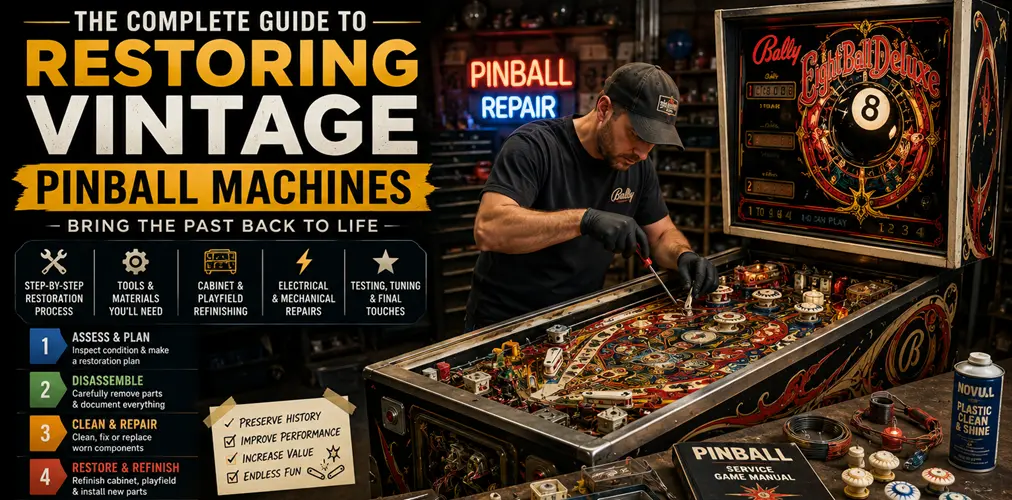
The vintage pinball machines are historical gems that need to be maintained properly. If you have a precious Williams machine made in the 1970s or a Bally one in the 1980s, the restoration will allow you to enjoy playing on your machine for a long time. The staff at GameBox Pinball Factory has developed the best restoration techniques over the last twenty years. We will reveal our tested techniques to turn your old machine back into a perfect piece of entertainment.
Assessment and Planning
The first step in the process of restoration is an assessment of the current state of your machine. Take photos and make notes regarding the rusting, corrosion, broken parts, and problems with electronics. This step will help to define the extent of the restoration needed and whether professional help is required. Develop a restoration plan paying attention to the most important aspects, such as the condition of the playfield, flippers, and electronics, allowing the game to be played.
Playfield Restoration Techniques
Your machine’s playfield needs careful attention during restoration. Start off with a clean playfield through the use of correct solvents to strip away the years of dirt without affecting the art on the playfield. Stubborn dirt should be removed using special pinball cleaning solutions. You should examine the playfield for any damages such as cracks and loose paint, and then repair them using the right type of epoxy for the material of the playfield. Serious playfield damage needs restoration by professionals. Once you are done with this step, you will need to put on protective coatings that not only preserve the look but also prevent any future damage.
Electronic Systems and Flipper Restoration
When dealing with vintage pinball machines, there will always be the challenge of sourcing parts for the electronic components. The circuits need testing to determine if they have failed. Capacitors, corroded switches, and damaged relay coils need to be identified. You will also need to restore flippers and ensure that you have their proper adjustments and maintenance. Check the flipper contacts as well as their solenoid response. The flipper springs are important for good flipper action. This process involves mechanical and electrical knowledge.
Cabinet Restoration and Artwork Preservation
Cabinets give the appearance of your machine. Repair your cabinet by stripping away any old finish and repairing the wood. Use authentic stains and finishes to make your cabinet look as original as possible. Repairing your cabinets requires great patience and meticulousness. Reproduction of artwork is considered fine restoration. Original artwork usually has hand-painted elements that require special skills. Some people prefer to keep original artworks despite some wear due to the fact that it may affect authenticity after the restoration. There is also an opportunity to make copies of the artwork.
Long-Term Maintenance for Restored Machines
Once restoration is done, correct maintenance will ensure the preservation of your investment. Using soft cleaning procedures ensures the machines stay free of any grime, which causes rapid wear. Playfield cleaning once per month will maintain the finish and protect against damage. Electrical systems should be checked every quarter and tested for the reaction of the flippers and switches. Tackle any small problems before they become big repairs. Machines should be kept in controlled climates, avoiding warping of wood and degradation of electronics. Annual servicing by professionals ensures all mechanical and electrical systems operate at their peak.
Wrapping Up
Vintage pinball machine restoration allows people to relive the entertainment of the past and preserve the mechanical artwork. No matter whether you perform the restoration yourself or seek the help of professionals, in both cases, the outcome is a restored and playable machine. At GameBox Pinball Factory, we bring years of restoration experience to each of our projects. Get in touch with us to learn more about your restoration options.


Responses